About:

Our blog covers topics of importance to anyone interested in buying or selling a home in the metro-Warren/Detroit area.

Categories


March 17, 2008

Beware of Hazards When Investing in Foreclosures

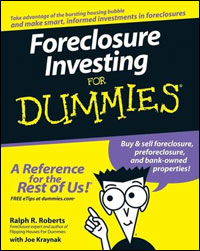
Our founder and CEO, Ralph R. Roberts, CRS, GRI, was interviewed for an article about investing in foreclosures that appeared in this past Sunday’s edition of The Tampa Tribune. As many people may know, Ralph wrote the book on investing in foreclosures and our staff here at Ralph Roberts Realty regularly helps people in the metro-Detroit area understand the pitfalls and upside associated with investing in foreclosures.

If you’re considering investing in foreclosures, read Ralph’s book, Foreclosure Investing For Dummies. In the meantime, here’s The Tampa Tribune interview:

The Tampa Tribune
Published: March 16, 2008

TAMPA - One in every 254 homeowners in the Sunshine State received a foreclosure filing in February. That’s the third-highest in the nation.

The foreclosure crisis is negatively affecting neighborhoods and the economy.

But like every crisis, this is viewed by some as an opportunity to profit.

As more homeowners and lenders get desperate to unload properties, they cut prices, making foreclosure homes enticing to real estate investors. Books on getting rich quick off foreclosures arrive on bookshelves daily, and experts are traveling the country holding foreclosure seminars. The process looks so easy that even people with no real estate experience are hanging out at county courthouses, poised to make offers on foreclosure properties.

With foreclosures on the rise and mortgage interest rates low, this may indeed be the perfect time to invest. But, experts warn, it’s easy to get trapped by pitfalls in the market. If you’re not careful, some warn, you may wind up in foreclosure yourself.

The Tampa Tribune interviewed three experts on investing in foreclosure properties and offers a sampling of their advice. The experts are:

- Ralph R. Roberts, co-author of “Foreclosure Investing For Dummies” and a real estate agent and investor in Michigan.

- Mike Kane, chief executive officer of St. Petersburg-based ForeclosuresDaily.com, which sells foreclosure data and holds classes on investing.

- Annalisa Burgos, real estate editor of FrontDoor.com, a Web site that features content from HGTV.

Don’t assume it’s a good deal just because the home is in foreclosure. And make sure you get a fair price.

“Sometimes people get caught up in the foreclosure hype and end up paying more for a home in foreclosure than they would pay for the same house down the street that’s not in foreclosure,” Roberts says. “Foreclosure homes are not always a good deal.

“People don’t realize that you make your profit when you buy and then you realize the profit when you sell. If you pay too much, you won’t make the profit on the back end. Even if you think you’re getting the home for a great price, you have to factor in the costs of fixing up the house.”

Do your homework.

Do a title search. Find out who all the lien holders are, and make sure you know the homeowner’s situation. You could get stuck having to pay those liens.

“Some novice investors can get into trouble when the lender holding the second mortgage forecloses before the main lender,” Kane says. “The investor may actually be buying the second mortgage and find out they still owe the first mortgage.”

Get an inspection, if possible.

Some deals that look too good to be true are just that, Burgos says. An inspection may show foundation, roof or termite problems. Some auctions don’t allow investors to conduct inspections before the sale, she says. Investors should be aware that at those sales, the deal may be final, even if the home has problems.

Some auctions will allow investors to tour the home. If that’s the case, Kane suggests you take a professional inspector or a friend with a good eye for problems.

Don’t wait for the home to work through the foreclosure process.

Buying a home directly from the homeowner, before a lender takes it back, could result in the best deals, the experts say. You can get lists of homes entering the foreclosure process at local courthouses or from some Web sites.

Frustrated homeowners are sometimes willing to give deep discounts to avoid a foreclosure on their record. Lenders who have a lot of foreclosure homes on their books are increasingly willing to accept short sales, which means they’ll allow the homeowner to sell the property for less than they owe.

This method isn’t best for most novices, Burgos warns, because it requires heavy negotiating with homeowners and lenders.

Don’t buy in a neighborhood with numerous distressed properties on the same block.

If multiple homes on the same street are in foreclosure, that could be a red flag that there was investor fraud in the neighborhood during the boom years, Roberts says. If that’s the case, homes may be overpriced, and you don’t want to invest there.

Walk the neighborhoods and talk to neighbors, he suggests.

“If the whole neighborhood is in trouble, you can’t fix that with your one investment home.”

Invest close to home.

Roberts recommends beginner investors print out a map showing where they work and where they live. Draw a triangle around the two locations and don’t invest outside of that area.

“You don’t want to drive 45 minutes to work and then have to drive 45 minutes more to get to your investment property,” he says. “You need to be able to get there easily and often.”

Buy and hold.

“In this market, people can’t even sell their own homes, so it’s difficult to quickly flip a foreclosure home,” Burgos says.

During the housing boom, investors bought homes and immediately flipped them to other buyers for a profit. That time is over, Roberts says. You can make a lot of money investing in foreclosure properties, he says, but you should be prepared to keep and maintain the property for several years.

Posted By: Real Estate Office Staff @ 6:28 pm | | Comments (0) | Trackback |
Filed under: Buying & Selling, In the News, Foreclosure

February 28, 2008

With REOs, the best candidate isn’t always the highest bidder

Ilyce Glink–the award-winning, nationally-syndicated real estate columnist–recently put together a Q&A REO properties for Inman News that I thought would be good to share here:

Question: I have put an offer on a single-family residence at $2,000 over the asking price. The property is a short sale and the bank has already received seven offers on it. The deadline to accept or deny my offer was 5 p.m. last Wednesday. Instead of accepting or rejecting my offer, the bank contacted the agent saying they are waiting until Monday to make a decision. What are my options and what are they trying to do?

Answer (from Ilyce): Here’s what’s happening: The bank is trying to make a decision in a timely manner and your attempt to force the issue isn’t working. (Nice try, but no dice.) So, you have a choice. You can formally withdraw your offer or you can let it sit and see what happens.

Each lender has a process by which it has to evaluate each of the offers that has come in for an REO property to see which one is the best — best isn’t always the highest offer, by the way. It could mean they’re looking for the strongest buyer or one who is able to use the bank’s financing (which is another way for them to recoup their investment.)

I’d have your agent stay in touch with the lender to smooth things along and make sure the lender has all the information he or she needs to make a decision. It’s possible the lender will come back to you (and everyone else) on Monday to ask for another round of bidding. Or, the lender might simply come back and say, yes or no.

Unless you formally withdraw your offer, at that time you can decide whether to agree to purchase the property if you’re given the opportunity.

By the way, I hope you’re using a real estate attorney. Foreclosures and short sales are tough purchases and I’d hate to see you get caught because you didn’t have anyone representing your legal interest in the deal. Unless your broker is also a real estate attorney (and even if he is, he can’t be both to you in the same transaction in some states), you should hire a real estate attorney.

Then, later in the piece, Ilyce fields this question:

Q: My son and his wife are interested in purchasing a foreclosure property as their primary residence. They’re looking for a townhouse because they can’t afford to pay the full cost for a single-family home. Can you tell us what percentage of the foreclosed loan the former owner’s private mortgage insurance covers? When will that be paid and to whom is it paid? Can my son and his wife expect a significant reduction in the sale price of a foreclosed home if the private mortgage insurance kicked in?

A: Private mortgage insurance (PMI) covers the portion of the mortgage that exceeds 80 percent of the purchase price of the home.

For example, if a home buyer gets a mortgage for 90 percent of the purchase price of a home (or for 90 percent of the appraised value of the home if the owner is refinancing) and the purchase price or value is $100,000, PMI would cover the top 10 percent of the loan.

PMI will protect the lender in case the lender forecloses on the home and then sells the home for less than $90,000 but more than $80,000. If the home were to sell for less than $80,000, the lender would have the PMI protection coverage on $10,000, the difference between $80,000 and $90,000, but would take a loss on the sale if the sales price is less than $80,000.

In another example, if the first mortgage is for 100 percent of the purchase price of the property, PMI would cover the lender against a loss over the top 20 percent of the mortgage.

You have to keep in mind that most loans that exceed 80 percent of the purchase price of a home have PMI, but in many cases they do not. If a homeowner obtains a first mortgage for $80,000 on a home purchase valued at $100,000 but gets a second loan for $10,000, this purchase or refinance would not involve PMI coverage.

How does this play out in practice? Right now, all of the companies that sell private mortgage insurance are reporting enormous losses from 2007, due to short sales and foreclosures. Most of these publicly traded companies are reporting their first losses ever.

When someone sells a home for less than the mortgage amount, PMI kicks in and reimburses the lender for the portion of the mortgage that was covered by the loan. So if the mortgage lender agrees to accept a short sale for $10,000 less than the mortgage amount and the loan had PMI, the PMI company would write a check for $10,000 (or a portion of that amount) to the lender, making the lender whole.

But I’ve been unable to find a way to figure out exactly how much the lender is reimbursed by the private mortgage insurer. The good news is that information isn’t relevant when making an offer for an REO property. (REO is industry jargon that stands for “real estate owned,” which means the lender has foreclosed on the property and is the current owner.)

The discount you’re going to get from a lender on a piece of REO property depends on a combination of how much the local real estate market has tanked, how desperate the lender is to unload the property, and how much other homes are selling for in the neighborhood.

You may get a substantial discount, but it won’t have anything to do with how much the lender has been paid by the company who underwrote the private mortgage insurance policy.

Your attorney and real estate agent should be able to help you further. For information on how to identify and purchase foreclosures, check out real estate agent Ralph Roberts’ book “Foreclosure Investing For Dummies.” Roberts, who tells me he has personally purchased more than 2,000 foreclosures, does a nice job of explaining how to identify an appropriate foreclosure, negotiate for it, find the financing for it, and close on it.

Thanks, Ilyce, for the recommendation of my book. If anyone reading this post would like to pose additional questions about REOs, feel free to leave a comment below, or see Foreclosure Investing For Dummies for more information.

Posted By: Ralph Roberts @ 12:04 pm | | Comments (0) | Trackback |
Filed under: Investing, Buying, Foreclosure, REO

November 27, 2007

Help for People Facing Foreclosure

Not to offend anyone, but if you are a homeowner facing foreclosure, chances are pretty good that you are not thinking straight. You have no money, you can’t pay your bills, and the bank is sending you one notice after another warning you that if you fail to do something promptly, they will be forced to kick you out of your home. Unless you win the lottery, what recourse do you have?

It’s easy to get overwhelmed in these dire situations — so overwhelmed, in fact, that you may not even realize that you have numerous options to explore. In this blog entry, I explain the most popular options, along with a few that are not quite so common. Depending on your situation, not all of these solutions will be available, but it’s likely that at least a few of them will be.

Tip: Contact the bank who holds your mortgage immediately to discuss your options. One of the worst things you can do is avoid discussing the situation with your bank. I know it’s uncomfortable, but how uncomfortable are you going to be when the sheriff shows up to evict you?

Staying put

If you really want to remain in your home and are willing to work hard to keep it, you probably have several options that enable you to do so:

  • Reinstate the mortgage: If you can borrow some money from relatives or friends, you can reinstate the mortgage by catching up on missed payments along with any interest, penalties, and fees your bank has applied to your account.
  • Negotiate a forbearance: Your bank may be willing to set you up with a payment plan that enables you to catch up on your payments. Just be careful that the payment plan is affordable, so you don’t end up in the same situation six months down the road.
  • Refinance: If you have equity built up in the property, consider refinancing the current mortgage to reduce payments. If you have credit card debt, you may be able to consolidate all your debts into a single monthly payment that is less than the total payments you are currently making.
  • Sell to an investor and buy it back: If you are running out of time, you may be able to sell your home to an investor and purchase it back with a lease-option agreement or a land-sale contract (also called a contract for deed).

    A lease-option agreement is sort of a rent-to-own deal in which you rent the property for a fixed period of time and then have the option to buy the property back at the end of that time. With a land-sale contract, you simply make payments to the investor who purchased the property rather than to the bank. In both cases, you sign a contract that almost always has a forfeiture clause stating that you lose the house and everything you paid on it if you do not honor the agreement, so check with your attorney before signing anything.
  • Sell to an investor and rent it: If the investor is buying the property for long-term rental income, he or she may be willing to rent it back to you, assuming you have proven that you properly maintain the property. This is an excellent option if you have kids in school and need several months or even a year or two to get them through school before moving.
  • Redeem the property after the sale: Many states have a mandatory redemption period, during which time you can purchase the property from whoever bought it at the auction. You have to pay the buyer the amount he or she paid plus interest and any qualifying expenses the person paid (such as property taxes and insurance). Contact the register of deeds at your local county courthouse to find out whether your area has a mandatory redemption period and how long it is. This option typically requires borrowing money from a relative, friend, or private investor.

Selling your home

In almost 90-percent of foreclosure cases, distressed homeowners are best served by selling their home and finding more affordable accommodations. This is especially true if you have equity in the home — that is, if you can sell the home for more than you owe on it. That way, you don’t lose the equity (along with your home) in foreclosure.

Here are some options for selling your home:

  • Place your home on the market: Hire the Realtor in your area who seems to be selling the most homes to list your property. Tell the Realtor that you are facing foreclosure and ask whether he or she would be willing to accept a lower commission. (Some will, if only to generate a little positive PR.) On average, a Realtor can sell your home in half the time and for significantly more money than you can sell it for by yourself.
  • Sell your home to an investor: If you don’t have at least a couple months to sell your house, you may be able to sell it to an investor who can pay cash and close the deal in a hurry. In most cases, however, you are looking at having to accept about 20 percent less than the true market value of your home.
  • Negotiate a short sale: If you cannot sell the home for enough to break even, your bank and other lenders may be willing to negotiate a “short sale” — that is, accept less than the full amount owed on their loans. Lenders who hold second mortgages or other liens against your property may be more willing to negotiate, because they stand to lose everything if your home ends up being sold at auction.

Walking out

If you have little, no, or negative equity in the property, don’t really care (and couldn’t do anything about it even if you did care), consider walking away prior to eviction day. This will at least save you from the embarrassment of a forced eviction.

Here are your options when choosing to walk away:

  • Offer a deed in lieu of foreclosure: Your bank may be willing to let you off the hook for the money you owe by turning in your keys and signing the deed to the property over to the bank. Make sure you have legal representation if you choose this option, so that the bank can’t come after you later for any shortfall.
  • Gift the house and your problems to an investor: You may be able to deed the property over to an investor, who would be in a better position to negotiate short sales with your lenders to make the transaction profitable for himself or herself. Again, consult an attorney before moving forward.
  • Walk out the door: Your credit is already going to be damaged if your home is sold at a foreclosure auction, so why not just walk away? Banks rarely pursue homeowners who simply abandon the property. Again, not the best option but certainly an option you have at your disposal.

Buying yourself some time

You can buy yourself some additional time in the property in various ways. Here are what I believe to be the three most common options:

  • Hire a foreclosure attorney. Don’t settle for just any attorney. Hire someone who specializes in foreclosure law. By simply forcing the bank and the bank’s attorneys to follow the letter of the law, your attorney may be able to buy you several weeks, months, or even years in the house. Just be sure you weigh the costs and benefits, so you don’t end up owning more money than before you hired the attorney.
  • File for bankruptcy. To some people, bankruptcy sounds like an easy fix, but that is rarely the case. Bankruptcy is costly and often fails to resolve anything. You buy yourself some time but often end up owing more later. Do the math before you decide to file for bankruptcy.
  • Stay without paying. Most states have a redemption period, during which time you can buy back your property from whoever purchased it at the auction.
  • Doing nothing

    The absolute worst thing you can do upon receiving a foreclosure notice is nothing. I recommend that you at least contact your lender. Better yet, try everything:

    • Place your house on the market.
    • Talk to a loan officer about refinancing
    • Discuss your situation with a real estate investor.
    • Work on tightening your financial belt, so when you do finally get through this crisis, you come out of it in a little better shape.

    In my latest book, Foreclosure Investing For Dummies, I discuss these options in greater detail, because anyone who’s investing in foreclosures needs to know how to provide assistance to distressed homeowners. Be careful though when dealing with investors. Some will intentionally mislead you and fail to inform you of all of your options, just so they can scoop up your home for pennies on a dollar.

    Now that you know your options, I hope you’ll agree that you are in much better shape to protect yourself, your family, and your home.

    Posted By: Ralph Roberts @ 2:18 pm | | Comments (0) | Trackback |
    Filed under: Foreclosure

    November 20, 2007

    A Mortgage Meltdown Quiz - Part II

    My recent commentary, “A Mortgage Meltdown Quiz,” inspired a great deal of feedback both positive and negative. Most of the negative feedback came from mortgage brokers who were understandably upset by the fact that I was placing much of the blame about the current mortgage meltdown squarely on their shoulders. Most of the positive feedback came from homeowners who were about to lose their homes because they followed the advice of misdirected mortgage originators and purchased risky products promoted by mortgage lenders.

    I do stand corrected on two points. First, not all mortgage brokers are to blame. Every industry has its share of top-notch professionals who look out for the best interests of their clients. Although I single out loan originators in this particular commentary, in my book Protect Yourself from Real Estate and Mortgage Fraud, I list nearly a dozen professions that contribute to real estate and mortgage fraud, including real estate agents, appraisers, loan originators, title company representatives, REO brokers, and notaries. You can find good and bad professionals in all of these groups. Second, as at least two people have pointed out, mortgage brokers are not typically the people who package up the mortgage loans and sell them to investors. The broker may earn a commission or fee for processing the loan, but the mortgage lender actually is the one who packages the loan with other loans and then sells it to investors for a markup. In addition, the broker and originator play no role in creating the product; they didn’t invent the risky products or allow homeowners to take out these loans without setting up escrow accounts for paying taxes and insurance.

    Although I do stand corrected on these two points, I stand by the premise of my commentary–the major cause of the current mortgage meltdown has less to do with the fact that homeowners are not making their payments and more to do with the fact that mortgage companies are having to buy back their bad loans. And when they run out of cash and cannot buy back the loans, their warehouse line gets cut off, they are basically forced out of business, credit becomes tight, and homeowners can’t refinance their way out of trouble.

    Several disgruntled readers (primarily mortgage loan originators) have pointed out that mortgage lenders (not brokers or loan officers) are to blame for creating high-risk mortgage products and for encouraging their brokers and loan officers to push these products. One person went so far as to describe the broker as “the tool of the lender,” simply marketing whatever products the lender chooses to place on the market.

    I agree that lenders and Wall Street are to blame for making risky products available, but lenders can’t force brokers to sell these products to clients who are ill-served by them. As a Real Estate Agent, I would never think of selling a particular home to a buyer who couldn’t afford it or selling defective homes to my clients simply because a builder was pressuring me to sell those homes. I believe that Real Estate professionals who deal directly with consumers should be responsible to their clients, not to the manufacturers of certain products.

    Let’s not forget who the customer is!

    Posted By: Ralph Roberts @ 2:51 pm | | Comments (0) | Trackback |
    Filed under: Mortgages, Foreclosure

    November 7, 2007

    Assessing Your Readiness to Invest in Foreclosures

    Not everyone is cut out to invest in foreclosures. Some people would rather watch TV, invest in stocks and bonds, spend time with family members, or hang out with their friends. Others have a low risk tolerance and can’t convince themselves to borrow money.

    Do you have what it takes to successfully buy, fix, and sell foreclosure properties for a profit? The following list describes the bare essentials:

    • Sticktoitism. That’s a word I use to describe a combination of the determination and hard work required to overcome adversity. When you’re flipping houses, you have plenty of adversity.
    • Time: If you can scrape together enough spare time to go house hunting, supervise repairs and renovations, and consult with a real estate agent, you have all the time you need. Many of the most successful investors are weekend warriors, devoting their evenings and weekends to the pursuit of profitable flipping.
    • Money: You don’t need to be rich to buy and sell foreclosure properties, but you do need to be able to get a loan. You can finance your investments in several ways–by using your own cash and the equity in your home, borrowing from friends and family members, or getting a loan from a private lender. Talk to a mortgage broker in your area.
    • Guts and gusto: Guts and gusto combine to create the perfect personality for a real estate investor. You need guts to purchase a house with tens to hundreds of thousands of someone else’s dollars in the belief that you can sell it for substantially more in a few weeks or months. A certain amount of gusto is also required to generate the energy and perseverance required to turn trash into treasure.
    • Family: When a spouse and children are involved, everyone has to sacrifice family time and other indulgences to contribute their fair share to the venture. Families who work well together can make an investment property a family project that draws them closer together. If family members are already a little testy, however, the stress and sacrifice can drive them apart.
    • Tools: You don’t need a truckload of power tools to flip houses, unless you plan on doing most of the repairs and renovations yourself. A pen, a pad of paper, a calculator, reliable transportation, and a cell phone are the only tools you really need.

    Tip: Don’t get hung up on what you don’t have, just be honest about it. Do what you’re good at and hire out the rest… or get a friend to help.

    For additional tips and tricks about investing in real estate, check out my other site, GetFlipping.com, where you can sign up for a free 31-day email course on flipping houses the right way.

    Posted By: Real Estate Office Staff @ 3:30 pm | | Comments (0) | Trackback |
    Filed under: Investing, Buying, Foreclosure

    September 4, 2007

    Foreclosures Continuing to Hammer Wayne County, Michigan

    According to a recent study, Detroit had one the three highest foreclosure rates among the nation’s 100 largest metropolitan areas during the first six months of this year. Detroit’s woes–one foreclosure filing for every 29 households–ranks it second in the nation. The metro area, comprised of Wayne County, reported 28,705 foreclosure filings, which translates into a 26 percent increase from the previous six-month period and nearly double the number reported in the first six months of 2006.

    If you are one of the many Michigan residents caught up in this subprime lending/foreclosure mess of ours, this blog entry may interest (no pun intended) you.

    First though, a little background information: Subprime lending is highly controversial. Opponents say that the subprime lending companies engage in predatory lending practices such as deliberately lending to borrowers who could never meet the terms of their loans, thus leading to default, seizure of collateral, and foreclosure. Proponents of subprime lending maintain that the practice extends credit to people who would otherwise not have access to the credit market.

    The controversy surrounding subprime lending has expanded as the result of an ongoing lending and credit crisis both in the subprime industry and in the greater financial markets. This phenomenon has been described as a financial disease which has led to a restriction on the availability of credit in a number of financial markets. Hundreds of thousands of borrowers have been forced to default and several major subprime lenders have filed for bankruptcy.

    Well, last Friday, in a widely publicized address from the Rose Garden, President Bush said that a bailout is out of the question:A federal bailout of lenders would only encourage a recurrence of the problem.” This is certainly true. Bailing out the lenders would simply lay the burden on taxpayers and provide the carpetbaggers with another opportunity to pillage.

    The President did reach out to some distressed homeowners–those with good credit histories who could probably pull themselves out of their current crises with a little help from the federal government. The FHA (Federal Housing Authority) will be given more flexibility to assist homeowners who have subprime mortgages. Homeowners may also be spared having to pay additional taxes in the event that the lender forgives a portion of their debt. Perhaps this will encourage lenders to work out reasonable solutions with homeowners.

    Nevertheless, what about all the other consumers–what about hard-working American families who are too deep in debt to be saved? What about the children of these people who are going to be uprooted from their neighborhoods and the school districts where all their friends go?

    Government officials, lenders, and people who have not been victimized by the shoddy lending practices of the last decade are quick to judge. After all, they are not the ones paying the price. The people who are suffering are the same people who usually suffer in these situations–consumers. These are the people who were sold ARMs (adjustable-rate mortgages) that ended up costing an arm and a leg. They were told that they could refinance before the rates went up or could build higher credit scores by making their payments on time and then refinance with a low interest rate mortgage later.

    Then, the bottom dropped out of the housing market, making it nearly impossible for these hard-hit homeowners to refinance. Some of these loans even came with stiff prepayment penalties to further discourage people from refinancing. These folks were led down this path simply because they trusted an “expert” in a fancy suit with a silver tongue who failed to warn them of the looming trouble and the risk they were taking on. Where are these smooth talkers now? Probably out of work and seeking more fertile fields to ply their trade. They turned the American Dream of Homeownership into a nightmare, but they certainly are not the ones having to wake up to it.

    Instead of letting them off the hook, they should be forced to take ownership of the problem they created. Instead of waiting around to see whether the federal government is going to bail them out, they should be actively pursuing the homeowners they led astray and offer them real solutions that can help these distressed homeowners regain their financial footing.

    Posted By: Ralph Roberts @ 10:59 am | | Comments (2) | Trackback |
    Filed under: Real Estate Trends, The Economy, Mortgages, Credit Scores, Wayne County, Foreclosure